


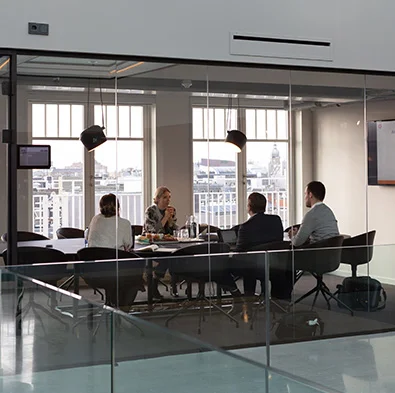
In today’s fast-paced digital world, the integration of IT and business strategies is no longer optional—it’s essential. Businesses that leverage technology effectively gain a competitive edge, streamline operations, and foster growth. Here are five key elements that play a critical role in promoting IT and business success:
1. Data-Driven Decision Making
Data is one of the most valuable assets for any business. The ability to collect, analyze, and act on data allows companies to make informed decisions that align with their strategic goals. Modern IT systems, including AI and machine learning, help businesses gather insights from large volumes of data, allowing them to:
- Identify customer trends
- Optimize processes
- Make accurate financial forecasts When business decisions are driven by accurate data, companies can navigate the market more effectively and respond proactively to changes.

Automation and Efficiency
Automation is transforming the way businesses operate by reducing manual tasks and increasing efficiency. By automating routine processes such as payroll, customer service, and inventory management, businesses can:
- Lower operational costs
- Improve accuracy
- Free up time for employees to focus on higher-value tasks IT solutions like robotic process automation (RPA) and AI-driven tools are pivotal in helping businesses scale quickly and efficiently, driving productivity across various departments.
Cybersecurity and Risk Management
As businesses become increasingly dependent on digital systems, cybersecurity has never been more important. A single breach can lead to financial losses, legal consequences, and damaged reputation. Implementing strong cybersecurity measures, such as encryption, firewalls, and secure access controls, helps protect critical business data. Additionally, IT departments play a crucial role in developing risk management strategies to minimize potential threats. A secure IT infrastructure gives businesses peace of mind and promotes long-term stability.
Customer-Centric Technology
In today’s competitive market, customer experience is a major differentiator. Businesses that leverage IT to enhance customer interaction and satisfaction often come out on top. Tools like customer relationship management (CRM) systems, personalized marketing platforms, and AI chatbots help companies:
- Build stronger relationships with customers
- Provide personalized experiences
- Improve customer retention By prioritizing customer-centric technology, businesses can create long-lasting loyalty and foster continuous growth.
A team of 30 seems like quite a significant resource to focus on the digital pound,” Ian Taylor, an adviser to the trade association CryptoUK, told the Times. “It shows the impact it would have, and that the bank are serious about it.
Mitchel Krytok – Quote
Conclusion
The integration of IT and business strategies is essential for thriving in today’s marketplace. By embracing data-driven decision-making, automation, cybersecurity, cloud computing, and customer-centric technology, businesses can unlock new opportunities for growth and success. As technology continues to evolve, those who leverage it effectively will remain competitive and agile in a rapidly changing business landscape.





3 Comments
Heather Smith
April 24, 2024, at 9:58 amSed at nulla vel elit molestie rutrum non nec orci. Mauris varius, odio rutrum iaculis sagittis, erat urna luctus nisl, at tempor turpis mi at diam. Vestibulum ullamcorper neque eu sapien congue, a ultrices risus faucibus. Ut et felis non ipsum maximus laoreet. Curabitur iaculis bibendum.
Heather Smith
April 25, 2024, at 3:10 amLorem ipsum dolor sit amet, consectetur adipiscing elit. Fusce elementum, eros et scelerisque hendrerit, nisi augue placerat metus, at consequat justo lacus a ligula. Integer eget leo ac neque sagittis scelerisque ut non urna. Aenean suscipit velit ut libero viverra mollis et sagittis arcu.
Heather Smith
April 25, 2024, at 3:11 amAs the world continues to fight COVID-19 some property owners are searching
for way they can improve the security of their buildings.